
Close
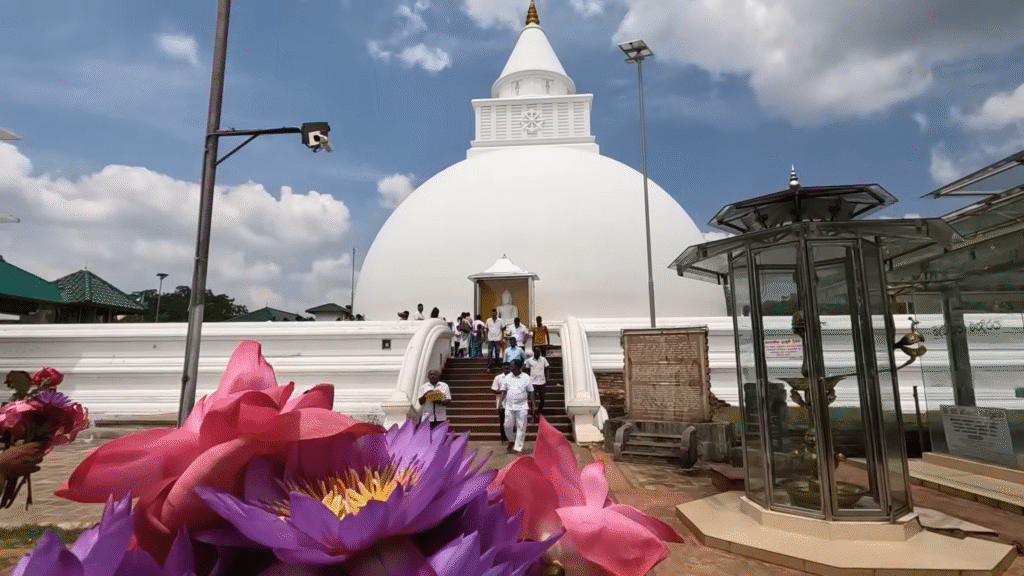
Anuradhapura, located in the North Central Province of Sri Lanka, is one of the island’s most ancient and historically significant cities. Serving as the country’s first capital from the 4th century BCE to the 11th century CE, it flourished for over 1,300 years as a political and religious hub. The city is a sprawling complex of ancient ruins, towering stupas, and sacred sites, earning it the designation of a UNESCO World Heritage Site. It stands as a testament to the ingenuity of the ancient Sinhalese civilization, particularly their architectural and hydraulic engineering skills.
Anuradhapura was founded in the 4th century BCE and quickly grew to become a major urban center. Its golden age began in the 3rd century BCE with the introduction of Buddhism to the island by Mahinda, the son of the Indian Emperor Ashoka. The city became the cradle of Buddhism in Sri Lanka, and its development was deeply intertwined with the religion. Monks, kings, and common people contributed to the creation of a magnificent city adorned with palaces, monasteries, and grand stupas.
The city’s decline began in the 10th century CE due to repeated invasions from southern India. It was eventually abandoned and was consumed by the jungle, remaining hidden for centuries until it was rediscovered in the 19th century. Today, it is one of the most important archaeological sites in South Asia and a revered pilgrimage destination for Buddhists.
Anuradhapura was founded in the 4th century BCE and quickly grew to become a major urban center. Its golden age began in the 3rd century BCE with the introduction of Buddhism to the island by Mahinda, the son of the Indian Emperor Ashoka. The city became the cradle of Buddhism in Sri Lanka, and its development was deeply intertwined with the religion. Monks, kings, and common people contributed to the creation of a magnificent city adorned with palaces, monasteries, and grand stupas.
The city’s decline began in the 10th century CE due to repeated invasions from southern India. It was eventually abandoned and was consumed by the jungle, remaining hidden for centuries until it was rediscovered in the 19th century. Today, it is one of the most important archaeological sites in South Asia and a revered pilgrimage destination for Buddhists.
Key Attractions and Landmarks
The ancient city of Anuradhapura is spread out over a vast area, and its main attractions are a collection of monumental stupas, monasteries, and other architectural wonders.
Jaya Sri Maha Bodhi: This is arguably the most sacred site in Anuradhapura. It is a cutting from the original Bodhi Tree in Bodh Gaya, India, under which Lord Buddha attained enlightenment. Brought to Sri Lanka in the 3rd century BCE by Sanghamitta, the daughter of Emperor Ashoka, it is considered the oldest historically documented tree in the world. The tree is a living link to the Buddha and is a focal point for veneration.
Ruwanwelisaya: This magnificent, massive white stupa is one of the most revered and beautiful monuments in Sri Lanka. Built by King Dutugemunu in the 2nd century BCE, it is a brilliant example of ancient Sinhalese engineering and architecture. The stupa is surrounded by a wall adorned with a frieze of 344 elephants.
Jetavanaramaya: The sheer scale of this brick stupa is awe-inspiring. Built in the 3rd century CE by King Mahasena, it was once one of the tallest structures in the ancient world, second only to the Great Pyramids of Giza. Its construction is a testament to the advanced engineering knowledge of the time.
Abhayagiri Stupa and Monastery: This massive complex was one of the major monastic centers of ancient Sri Lanka, housing thousands of monks and serving as a renowned center of Buddhist scholarship. The Abhayagiri stupa itself is a huge dome, and the surrounding ruins provide a glimpse into the monastic life of a bygone era.
Isurumuniya Vihara: Tucked away amidst rocky outcrops, this rock temple is famous for its intricate stone carvings. The most notable carving is the “Isurumuniya Lovers,” a masterpiece of ancient Sinhalese art. The temple’s setting, with a serene pond at its base, adds to its tranquil beauty.
Thuparamaya: This is the first stupa to be built in Sri Lanka after the introduction of Buddhism. Commissioned by King Devanampiya Tissa in the 3rd century BCE, it is said to enshrine the right collarbone of the Buddha. The site features a unique vatadage (circular relic house) with beautifully carved stone pillars.
Kuttam Pokuna (Twin Ponds): These beautifully designed and highly sophisticated ancient bathing ponds are a remarkable example of ancient hydraulic engineering. They were used by the monks of the Abhayagiri Monastery and feature a complex system of underground pipes to fill and drain the water.
Anuradhapura is not just a collection of ruins; it is a spiritual and historical landscape that reflects a civilization’s profound devotion to Buddhism and its remarkable architectural prowess. The ancient city’s ability to thrive for so long, sustained by an intricate network of irrigation reservoirs and a thriving culture, makes it a truly unique and powerful destination

At RythmLanka Tours, we are passionate about turning your travel dreams into reality.
Our experienced team works closely with clients to deliver personalized travel plans, unique cultural experiences, and seamless journeys.